Find Contract Red Flags Before You Sign
Most business owners do not ignore contracts on purpose. They simply do not know which clauses deserve closer attention.
A contract may seem straightforward at first. It may explain the price, the services being provided, and the length of the agreement.
But the language that creates the most risk is not always the language that immediately stands out.
Automatic renewals, personal guarantees, indemnification provisions, cancellation terms, liability limitations, and other important clauses can easily get buried inside pages of legal language.
That leaves many business owners asking their attorney one broad question:
“Does this contract look okay?”
There may be a better way to start the conversation.
Do Not Replace Your Attorney. Ask Better Questions.
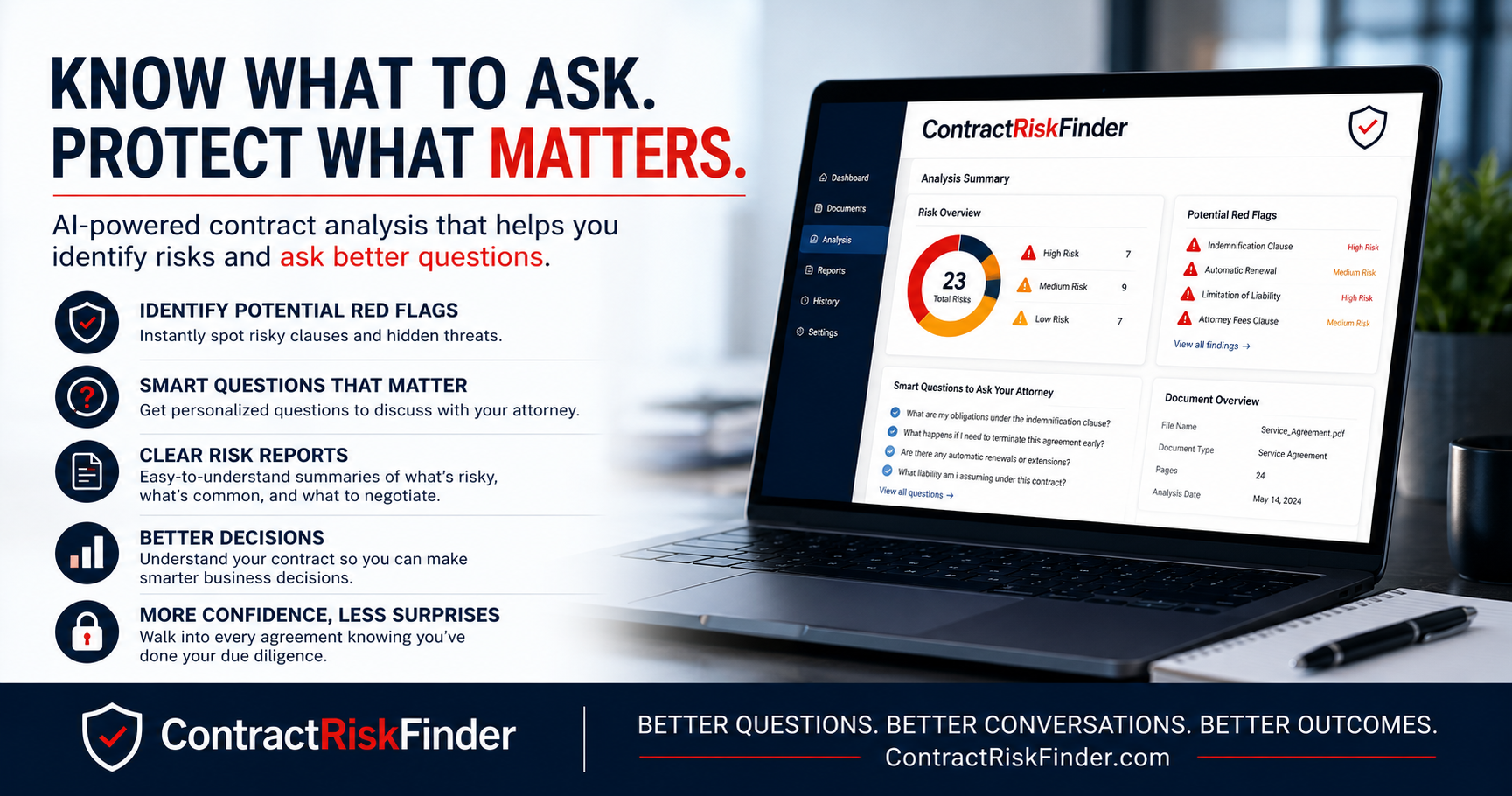
ContractRiskFinder.com is designed to help business owners better understand the contracts in front of them.
The platform analyzes a contract, identifies potential areas of concern, and helps users prepare more informed questions to discuss with an attorney.
It is not intended to replace legal counsel or provide a final legal opinion.
Instead, it can help you walk into a conversation with your attorney better prepared.
Rather than asking:
“Is this contract safe to sign?”
You may be able to ask more specific questions, such as:
- What does this indemnification clause require me to cover?
- Could I be personally responsible under this agreement?
- Does this contract renew automatically?
- What happens if I need to cancel the agreement early?
- Does the other party have the right to change the terms?
- Are there limits on the damages I can recover?
- Where would a dispute have to be resolved?
Why Contract Red Flags Are Easy to Miss
Business owners are usually focused on operating the business, serving customers, managing employees, and generating revenue.
They may not have the time or experience to identify unfamiliar legal language inside every agreement they receive.
Some contract terms may also sound harmless until they are applied to a real-world dispute.
For example, an automatic renewal provision may extend an agreement for another year unless notice is provided within a specific window.
A personal guarantee may create obligations beyond the business itself.
An indemnification clause may require one party to cover certain claims, costs, or losses.
The goal is not to panic every time one of these clauses appears.
The goal is to recognize which terms may deserve further review.
How ContractRiskFinder Can Help
ContractRiskFinder can help simplify the initial review process by presenting important contract concerns in clearer language.
Identify Potential Red Flags
The platform can help highlight provisions that may create financial, operational, or legal concerns.
Understand What Deserves Attention
Instead of treating every page of the contract as equally important, users can focus on provisions that may require closer examination.
Prepare More Intelligent Questions
A more specific question can lead to a more productive conversation with legal counsel.
Review Contracts With Greater Confidence
Understanding the general purpose of important clauses can make the contract-review process feel less overwhelming.
Save Time Before Speaking With an Attorney
Organizing concerns before a legal consultation may help both the business owner and attorney focus on the most relevant issues.
A Smarter Way to Approach Contract Review
Contract review does not have to begin with confusion.
A practical process may look like this:
- Upload or review the agreement through ContractRiskFinder.
- Identify clauses or provisions that may deserve attention.
- Create a list of specific questions.
- Discuss those questions with a qualified attorney.
- Make an informed decision before signing.
This approach keeps the attorney involved while helping the business owner participate more intelligently in the conversation.
The Most Expensive Part of a Contract May Not Be the Price
Many people review a contract by checking the cost, payment schedule, and term of the agreement.
Those details matter.
However, the most expensive part of a contract may be a clause that determines what happens when something goes wrong.
That could include responsibility for a lawsuit, restrictions on ending the agreement, ownership of intellectual property, confidentiality obligations, or limitations on your ability to recover damages.
Those are the kinds of provisions that deserve thoughtful questions before a signature is added.
Who Can Benefit From ContractRiskFinder?
ContractRiskFinder may be useful for:
- Small-business owners
- Entrepreneurs
- Independent contractors
- Consultants
- Agency owners
- Landlords and property managers
- Vendors and service providers
- Anyone reviewing a business agreement
Whether you are reviewing a vendor agreement, service contract, lease, partnership agreement, or another business document, understanding what to ask can be an important first step.
Protect Your Business by Showing Up Prepared
You do not need to become an attorney to take a more active role in reviewing your agreements.
You simply need a better way to identify what may deserve attention.
ContractRiskFinder helps turn a complicated contract into a clearer set of concerns and questions you can take to your attorney.
Do not replace your attorney.
Ask your attorney better questions.
Visit ContractRiskFinder.com to review your contract.
Disclaimer: ContractRiskFinder is an informational tool and is not a law firm. It does not provide legal advice, create an attorney-client relationship, or replace review by a qualified attorney. Results should be discussed with appropriate legal counsel before making legal or business decisions.