
Red flags in a freelance NDA before signing
Auto-Renewal Clauses: The Contract Trap That Costs Businesses Thousands Every Year
You signed a software subscription, a vendor agreement, or a service contract months ago. Life got busy. The renewal date quietly passed. And now you’re locked into another 12-month term you didn’t want, paying for something you no longer need. Sound familiar? Auto-renewal clauses are one of the most financially damaging — and most overlooked — provisions hiding in everyday business contracts.
Understanding how auto-renewal clauses work, where to find them, and what to watch out for before you sign can save your business significant time, money, and frustration. This guide breaks it all down.
What Is an Auto-Renewal Clause?
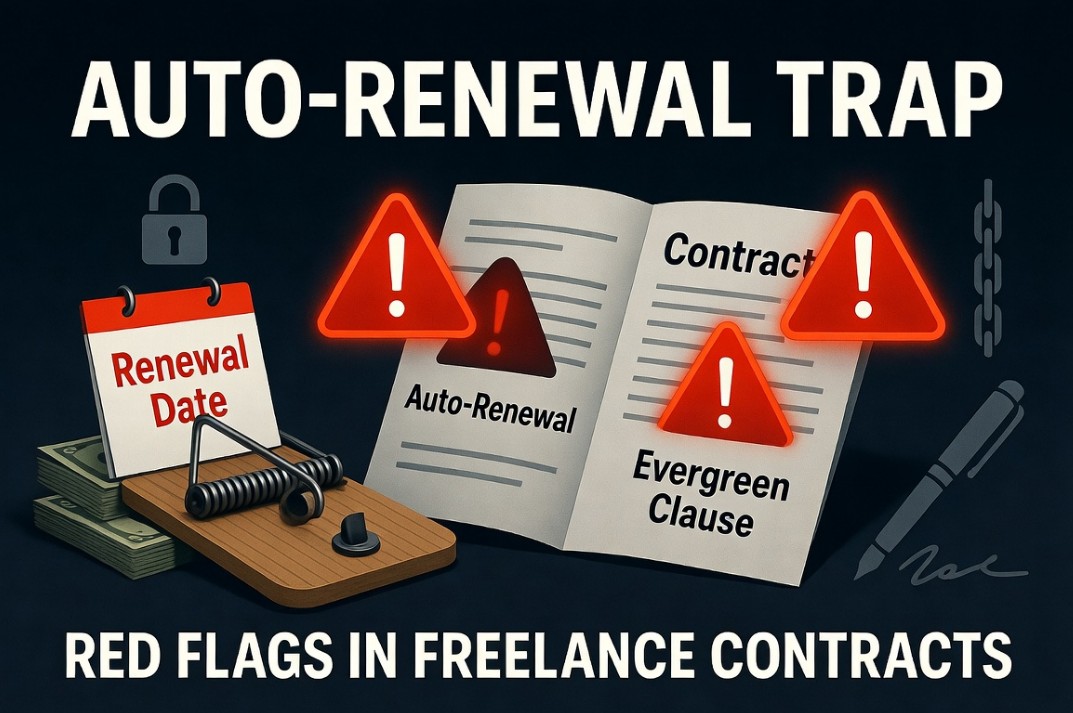
An auto-renewal clause — sometimes called an evergreen clause — is a contract provision that automatically extends the agreement for an additional term unless one party gives written notice to cancel within a specific window. That window is often 30, 60, or even 90 days before the contract’s expiration date.
On the surface, they seem convenient. No one has to renegotiate every year. But in practice, these clauses heavily favor the vendor or service provider, not you. If you miss the cancellation window by even one day, you could be committed to another full year of payments.
Where Auto-Renewal Clauses Hide
These provisions rarely appear under a heading that says “Auto-Renewal.” Instead, they’re embedded deep in contracts under sections like:
- Term and Termination
- Subscription Duration
- Contract Continuation
- Renewal Terms
- Service Period
Scan your contracts for free contractriskfinder.com
They’re often written in dense legal language, buried in the middle of a lengthy document, and designed to be easy to overlook. That’s not an accident. Vendors rely on customers not noticing these clauses — and the resulting passive renewals are a significant source of predictable revenue for them.
The Real Cost of Missing an Auto-Renewal Window
For small and mid-sized businesses, the financial consequences can be severe. Consider a $3,000-per-month SaaS platform with a 90-day cancellation notice requirement. If you miss that window, you’re automatically committed to another $36,000 annual contract. Legal disputes over whether proper notice was given are time-consuming and expensive — and courts often side with clear contract language, not good intentions.
Beyond the direct costs, there’s the operational headache of being locked into a tool or service that no longer fits your needs, while simultaneously trying to find and onboard a replacement. The hidden cost multiplies quickly.
Red Flags to Watch For in Auto-Renewal Language
Not all auto-renewal clauses are equally risky. Some are reasonable and clearly disclosed. Others are structured to trap you. Here are the specific red flags that should put you on high alert before signing:
- Long cancellation notice windows: Anything requiring 60 or 90 days’ notice is aggressive. The longer the window, the harder it is to time correctly.
- Price escalation on renewal: Some clauses allow the vendor to increase pricing at renewal without additional negotiation. You renew automatically — but at a higher rate.
- Vague notice requirements: If the contract requires written notice but doesn’t specify the method (email, certified mail, portal submission), disputes about whether notice was properly given become common.
- No acknowledgment requirement: Strong contracts require the vendor to confirm receipt of your cancellation notice. Without this, you have no proof the notice was received.
- Automatic multi-year renewals: Some contracts don’t just renew for one year — they renew for the full original term. If you signed a three-year deal, missing the window means three more years.
- Embedded in a master service agreement: Auto-renewal terms may govern all future order forms and statements of work signed under a master agreement, even if those individual documents don’t mention renewal.
How to Protect Yourself Before You Sign
The best time to address auto-renewal risk is before you put pen to paper — or click “I agree.” Here’s what you should do during contract review:
- Search the document for keywords like “automatically renew,” “evergreen,” “unless terminated,” and “notice of non-renewal.”
- Calculate the cancellation notice deadline from the contract start date and add it to your calendar immediately.
- Negotiate to reduce notice periods — 30 days is far more reasonable than 90.
- Request written confirmation requirements for cancellation notices.
- Push back on price escalation language or cap any increases to a defined percentage.
If reviewing dense legal contracts isn’t your strength — or if you simply don’t have time — that’s where contract risk tools become invaluable.
Frequently Asked Questions About Auto-Renewal Clauses
Are auto-renewal clauses legal?
Yes, in most jurisdictions they are fully enforceable, provided they are clearly disclosed in the contract. Some states have consumer protection laws requiring extra disclosure for auto-renewal terms, but B2B contracts typically have fewer protections.
Can I get out of a contract that auto-renewed without my knowledge?
It depends on the circumstances and jurisdiction. If the clause was clearly written and you had the opportunity to review it, courts generally uphold it. Consulting a contract attorney is advisable if you’re already locked in.
What’s a reasonable cancellation notice period?
Thirty days is standard and fair for most business service contracts. Notice periods beyond 60 days should be scrutinized and negotiated.
Scan your contract for free contractriskfinder.com