How to spot a one-sided vendor contract
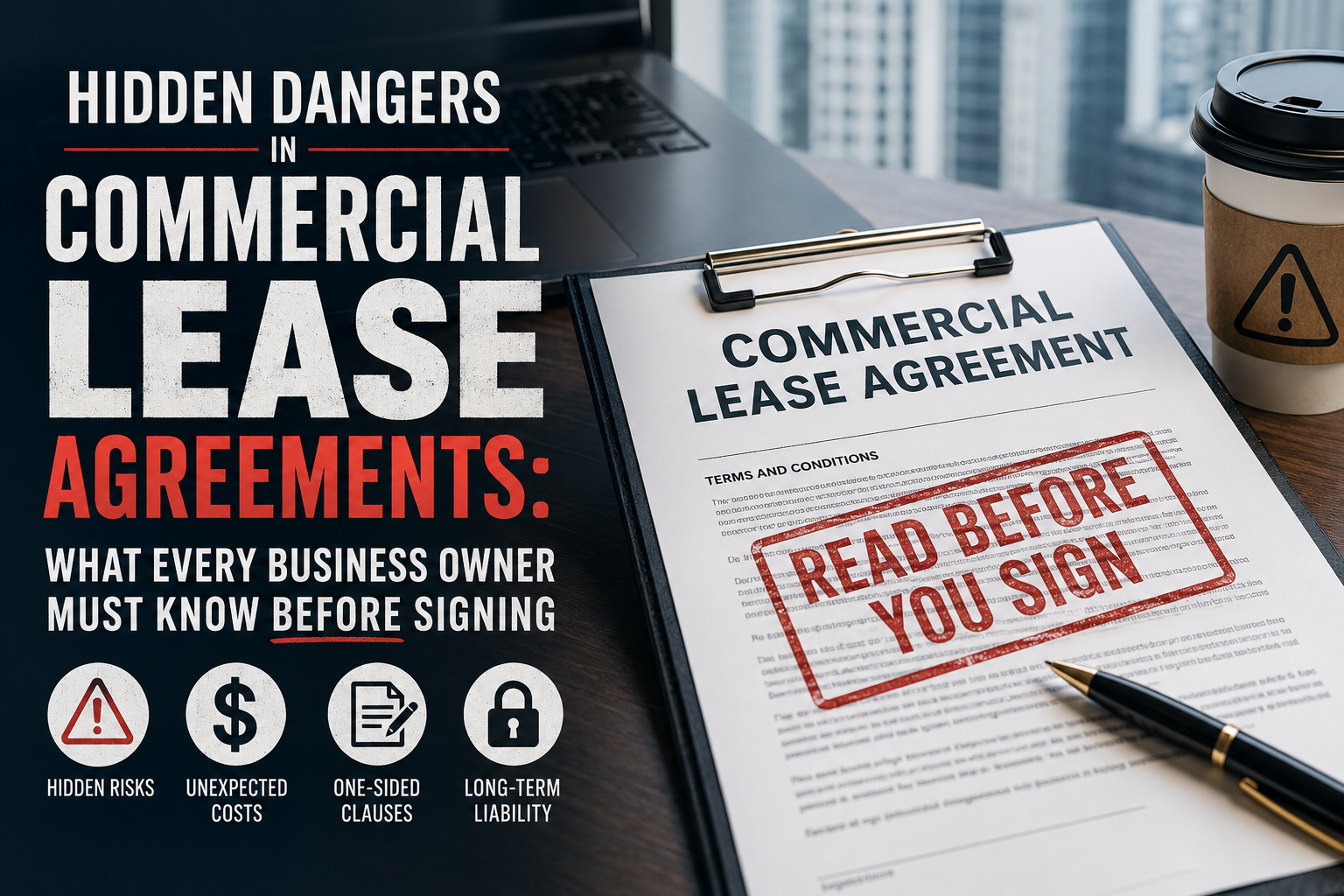
Hidden Dangers in Commercial Lease Agreements: What Every Business Owner Must Know Before Signing
Signing a commercial lease is one of the most significant financial commitments a business owner will make. Whether you are opening your first storefront, expanding to a new location, or renewing an existing lease, the contract you sign will govern your rights, obligations, and financial exposure for years to come.
The problem is that most commercial lease agreements are dense, complex documents written by landlords and their attorneys — and they are rarely written with your best interests in mind.
Every year, business owners unknowingly sign commercial leases packed with one-sided clauses that can cost them tens of thousands of dollars, strip away their negotiating power, or leave them personally liable long after a business closes. The good news is that understanding the most common red flags can help you negotiate better terms or walk away from a bad deal before it is too late.
Before signing any lease, many business owners are now using AI-powered contract analysis tools such as ContractRiskFinder to scan commercial agreements for hidden risks, explain difficult legal language, and identify potential red flags before costly mistakes occur. ContractRiskFinder can review leases, compare contracts, answer questions, and provide plain-English explanations of complex clauses in just minutes.
The Most Dangerous Clauses in a Commercial Lease
Not all risky lease language is obvious. In fact, the most dangerous clauses are often buried deep within a contract, written in technical legal language designed to obscure their true meaning. Here are the most critical areas where commercial leases tend to expose tenants to serious financial risk.
Personal Guarantee Clauses
Many commercial leases require business owners to personally guarantee the lease, meaning if your business fails, your personal assets — your home, savings, and retirement accounts — can be targeted to cover unpaid rent.
These clauses are often non-negotiable with large landlords, but their scope and duration can frequently be limited through careful review and negotiation.
Personal guarantees are among the most commonly identified risks during AI-powered contract reviews. ContractRiskFinder can quickly identify personal liability provisions and explain their potential financial consequences in plain language.
Triple Net (NNN) Provisions
Triple net leases require tenants to pay not just base rent, but also a share of property taxes, building insurance premiums, and maintenance costs.
Without clear caps on these escalating expenses, what appears to be an affordable lease can quickly become financially unmanageable as operating costs rise unexpectedly.
ContractRiskFinder can identify uncapped operating expenses, maintenance obligations, and hidden cost-shifting provisions that may significantly increase your occupancy expenses over the life of the lease.
Vague Repair and Maintenance Responsibilities
Ambiguous language regarding HVAC systems, plumbing, roofs, structural repairs, and maintenance obligations can leave tenants responsible for expensive repairs that many assume belong to the landlord.
Small wording differences can determine whether a tenant pays a few hundred dollars or tens of thousands of dollars in unexpected repairs.
Automatic Renewal Clauses
Some leases contain automatic renewal provisions that lock tenants into another lease term unless written notice is provided within a very specific timeframe.
Missing this deadline can result in years of additional financial obligations and reduced negotiating leverage.
Rent Escalation Clauses
Annual rent increases tied to fixed percentages or the Consumer Price Index may appear reasonable at first.
However, poorly drafted or uncapped escalation clauses can significantly increase rent payments over time and negatively impact profitability.
Assignment and Subletting Restrictions
Business needs change. Companies expand, relocate, merge, or sometimes close.
Overly restrictive assignment or subletting clauses can prevent tenants from transferring their lease obligations, forcing them to continue paying rent on space they no longer need.
Use Clauses and Exclusivity Provisions
Commercial leases often define exactly how a tenant may use the space.
Overly restrictive use clauses may prevent future business growth, while weak exclusivity provisions can allow landlords to lease neighboring spaces to direct competitors.
Why Standard Legal Review Is Not Always Enough
Many business owners assume that having an attorney glance at a contract provides complete protection. However, even experienced general practice attorneys may overlook nuanced commercial lease language if they do not regularly handle commercial real estate transactions.
Contract review can also be time-consuming and expensive, particularly when business owners are eager to move into a new location.
This is why many businesses now use AI-powered contract analysis platforms such as ContractRiskFinder before involving attorneys in negotiations.
ContractRiskFinder can:
- Scan lengthy commercial leases in seconds.
- Identify potentially problematic clauses.
- Explain legal language in plain English.
- Compare multiple lease versions.
- Answer questions about specific provisions.
- Highlight financial and liability risks.
- Help business owners prepare for negotiations.
The result is a more informed business owner and a more efficient use of legal counsel.
How ContractRiskFinder Can Help Review Your Lease
Commercial lease agreements often contain dozens of provisions that create financial exposure for tenants. ContractRiskFinder uses artificial intelligence to help business owners:
- Identify hidden lease risks and unfavorable terms.
- Detect personal guarantees and liability exposures.
- Analyze rent escalation clauses.
- Review maintenance responsibilities.
- Compare multiple lease versions.
- Ask questions about specific clauses.
- Generate plain-English explanations of legal language.
- Prioritize issues before consulting an attorney.
The platform is designed to help business owners better understand their agreements and prepare for negotiations. It is not a law firm and does not provide legal advice.
You can upload your lease for a free analysis at:
https://contractriskfinder.com
How to Protect Yourself Before You Sign
The most effective strategy for protecting your business begins long before you sit down at the signing table.
Request the full lease agreement as early as possible during negotiations. Review every clause carefully, paying particular attention to the areas discussed above.
Ask your landlord to modify or remove provisions that place unreasonable risk on your business.
Remember that nearly every provision in a commercial lease is negotiable, particularly in tenant-friendly markets.
Document every verbal agreement in writing through a formal lease amendment or addendum. Verbal promises made during negotiations are often forgotten or disputed later.
A signed amendment is far more valuable than a handshake.
Using tools such as ContractRiskFinder before signing can help identify issues early and provide a stronger negotiating position before legal fees begin to accumulate.
Frequently Asked Questions About Commercial Lease Red Flags
What is the most dangerous clause in a commercial lease?
Personal guarantee clauses often carry the highest level of risk because they expose personal assets to business liabilities. However, uncapped rent escalation provisions and vague maintenance responsibilities can also become extremely costly.
Can I negotiate terms in a commercial lease?
Yes. Unlike residential leases, commercial leases are highly negotiable. Landlords often expect tenants to negotiate unfavorable provisions.
How long does a typical commercial lease last?
Commercial leases commonly range from three to ten years, with five-year terms being the most common.
Do I need an attorney to review a commercial lease?
An attorney specializing in commercial real estate can provide valuable legal guidance. However, AI-powered review platforms such as ContractRiskFinder can provide an immediate analysis before legal expenses are incurred, helping you focus attorney time on the most important issues.
Get Your Contract Reviewed Before You Sign
Signing a commercial lease without understanding the risks can create long-term financial consequences for your business.
Before committing to years of rent obligations, hidden expenses, or personal liability, take the time to understand exactly what your lease contains.
ContractRiskFinder provides AI-powered contract analysis that can:
- Identify red flags.
- Explain difficult legal language.
- Compare contract versions.
- Answer contract questions.
- Highlight potential risks.
- Help you prepare for negotiations.
Start your free contract review today:
https://contractriskfinder.com
ContractRiskFinder is an AI-powered contract analysis platform and is not a law firm. The information provided does not constitute legal advice. Consult a qualified attorney regarding your specific legal situation.