Spain Won the 2026 World Cup With Defense. Is Your Business Equally Protected?
One moment changed the World Cup final.
After more than 100 minutes of scoreless soccer between Spain and defending champion Argentina, Ferran Torres found the opening Spain had been waiting for. His goal in the 106th minute delivered a 1–0 victory, Spain’s second men’s World Cup title and the dramatic conclusion to the largest World Cup ever played.
But Spain’s championship was not really built in the 106th minute.
It was built during every disciplined defensive stand, every substitution, every contingency plan and every decision made long before the winning goal crossed the line.
That is where the tournament offers an important lesson for business owners and healthcare professionals:
Success may get the headlines, but preparation keeps you in the game.
The Biggest World Cup Ever Created More Ways for Things to Go Wrong
The 2026 FIFA World Cup was unlike any tournament before it.
Forty-eight national teams competed across the United States, Mexico and Canada. The tournament included 104 matches, 12 groups of four teams and a new Round of 32. Teams reaching the final had to survive eight matches rather than the traditional seven.
More teams created more opportunity.
It also created more complexity.
There were more venues, more travel, more personnel, more medical decisions, more security concerns and more opportunities for an unexpected event to alter the tournament.
Business growth works in much the same way.
Adding employees, opening locations, introducing services or taking on larger clients can increase revenue. At the same time, every new moving part can introduce another point of vulnerability.
Think of it like expanding a soccer tournament from 32 teams to 48. The opportunity becomes larger—but so does the risk-management challenge.
A growing business may suddenly need to consider:
- Additional general liability exposure
- Workers’ compensation obligations
- Cybersecurity and data-breach risks
- Employment-related claims
- Commercial property protection
- Professional liability coverage
- Business interruption planning
Growth without updated protection is like adding more teams to a tournament without adding referees, medical staff or emergency plans.
Eventually, the structure begins to crack.
Spain’s Greatest Strength Was the Goal It Did Not Allow
Championships are often remembered for spectacular goals.
Spain’s 2026 title, however, was also a story about the goals that never happened.
Spain kept six clean sheets and conceded only one goal during its entire eight-match championship run. In the final, it prevented an Argentina team led by Lionel Messi from scoring for 120 minutes.
That kind of defensive performance is not accidental.
It requires organization, communication, preparation and people who understand exactly where they need to be when pressure arrives.
Insurance plays a similar role in business.
It is rarely the most visible part of an organization. Customers do not walk into a medical practice and compliment the professional liability policy. Employees do not celebrate the company’s commercial umbrella coverage. Patients may never know what risk-management procedures operate behind the scenes.
But when a claim arrives, that invisible defense can become one of the most important parts of the organization.
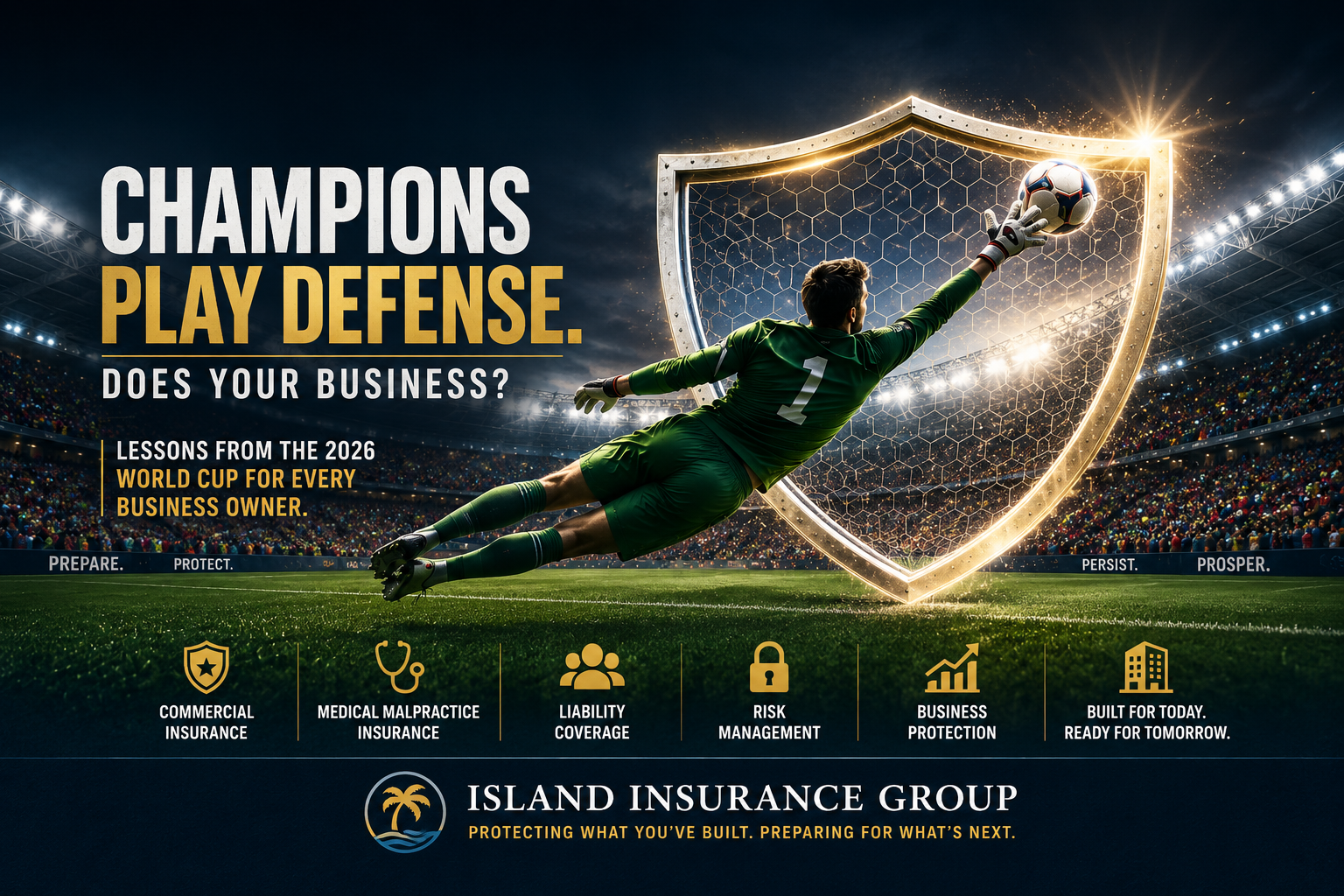
Good coverage is the goalkeeper nobody notices until the shot is already heading toward the corner of the net.
A Strong Offense Cannot Fix Every Defensive Gap
Many successful organizations naturally focus on offense.
They want more patients, more clients, more locations and more revenue. They invest in marketing, technology, recruiting and expansion.
Those investments matter.
But revenue alone does not protect a company from a serious lawsuit, employee injury, cyberattack, fire or professional liability claim.
Argentina entered the final with one of the tournament’s most dangerous attacks. Yet even a team capable of scoring repeatedly could not overcome Spain’s disciplined defense.
Businesses face the same reality.
A company may have impressive sales and strong cash flow, but a single uninsured or underinsured event can place enormous pressure on everything it has built.
Commercial insurance is not a substitute for growth. It is the defensive structure that helps preserve growth when something unexpected happens.
What Medical Practices Can Learn From Playing Under Pressure
The World Cup places athletes, coaches and medical professionals under extraordinary pressure.
A decision may need to be made in seconds. Should an injured player continue? Is a substitution necessary? Could returning too soon create a greater medical risk?
Healthcare professionals confront their own high-pressure decisions every day.
A diagnosis, treatment recommendation, prescription, referral or documentation error can have consequences extending far beyond one appointment.
Most medical professionals do not expect to make a mistake. Most athletes do not enter a match expecting to suffer an injury.
Risk management begins by accepting that good intentions do not eliminate exposure.
Medical malpractice insurance helps protect healthcare professionals and practices when allegations arise involving negligent treatment, misdiagnosis, delayed diagnosis, medication errors or other professional services.
The important word is allegations.
A claim does not automatically mean a provider did something wrong. But even an unfounded claim may require legal representation, documentation reviews, expert analysis and significant time away from the practice.
In soccer, the defense must respond whenever the opposing team attacks—even when the shot ultimately misses.
In medicine, malpractice coverage may need to respond even when the provider believes the care was appropriate.
Every Successful Team Needs Depth
Spain did not win the World Cup with one player.
Ferran Torres scored the championship-winning goal after entering the final as a substitute. That moment illustrated why elite teams invest in depth. They prepare for fatigue, injury, changing conditions and situations in which the original plan no longer works.
Businesses also need depth in their protection.
One insurance policy cannot necessarily address every exposure.
A medical practice, for example, might require a coordinated combination of:
- Medical malpractice insurance
- General liability insurance
- Commercial property coverage
- Workers’ compensation
- Cyber liability insurance
- Employment practices liability insurance
- Business interruption coverage
- Commercial umbrella insurance
Each policy has a different position on the field.
Medical malpractice insurance may protect against claims arising from professional care. General liability may address certain third-party injuries or property damage. Cyber coverage may help when sensitive data is compromised. Business interruption insurance may help an organization recover after a covered event disrupts operations.
Expecting one policy to handle every possible claim is like asking one defender to cover the entire field.
The New World Cup Rules Sent a Clear Message: Delays Have Consequences
The 2026 tournament also introduced new rules intended to reduce time-wasting and improve match flow.
Players being substituted generally had 10 seconds to leave the field. Referees could also begin a visible five-second countdown when a throw-in or goal kick was being deliberately delayed. Failing to restart play could result in possession being awarded to the opposing team or, following a delayed goal kick, a corner kick.
The message was simple:
Waiting too long can cost you.
The same principle applies to insurance planning.
Business owners frequently postpone coverage reviews because nothing appears to be wrong.
Then the organization hires new employees.
It begins offering a new service.
It purchases expensive equipment.
It stores more customer or patient information.
It signs a larger contract.
It moves into a new building.
Months or years pass, but the insurance program remains designed for the business as it existed in the past.
That creates a dangerous mismatch.
Reviewing insurance only after a claim is like changing the formation after the opposing team has already scored.
The Final Was Decided in One Moment—But Prepared for Over Many Years
Ferran Torres’ goal took only seconds to score.
The preparation behind it took years.
That distinction matters.
Major business losses often appear sudden: a patient files a malpractice claim, a customer slips on the premises, a hacker accesses confidential information or a storm closes an office.
The incident may happen in a moment.
The organization’s ability to survive it depends on decisions made months or years earlier.
Was the correct coverage purchased?
Were the policy limits sufficient?
Were new services disclosed to the insurer?
Were employees properly classified?
Was sensitive data protected?
Were contracts reviewed for insurance requirements?
Was there a continuity plan?
Risk management is less like predicting the exact minute a goal will be scored and more like building a team capable of responding no matter when the pressure arrives.
Five Questions Every Business Owner Should Ask After the World Cup
Spain’s championship offers a useful reason to conduct a defensive review of your own organization.
Ask yourself:
1. Has the business changed since our insurance program was created?
New employees, services, locations, equipment and revenue can all affect coverage needs.
2. Do our policy limits reflect the potential size of a modern claim?
The cheapest policy may become extremely expensive when its limits are inadequate.
3. Are professional services properly covered?
General liability insurance and professional liability insurance are not interchangeable.
4. Could we continue operating after a major disruption?
Property damage, equipment failure or a cyber incident can interrupt revenue even when the underlying damage is eventually repaired.
5. Do we understand what is excluded?
Knowing what a policy does not cover can be just as important as knowing what it covers.
Your Business Does Not Need to Play Without a Defense
The World Cup celebrates bold attacks, creative players and unforgettable goals.
Yet Spain lifted the trophy because it combined talent with discipline, depth and one of the strongest defensive performances in tournament history.
That formula is just as relevant off the field.
Businesses should pursue growth. Medical practices should innovate. Professionals should take thoughtful opportunities and serve more people.
But ambition works best when it has protection behind it.
At Island Insurance Group, we help businesses and healthcare professionals evaluate commercial insurance and medical malpractice coverage with the goal of identifying potential gaps before they become costly problems.
Because the best time to strengthen your defense is not after the claim.
It is while the score is still 0–0.
Is Your Coverage Championship-Ready?
Your organization may never face the business equivalent of a World Cup final.
But it will face pressure, change and unexpected moments.
The question is not whether every risk can be prevented.
The real question is whether your organization is prepared to respond when the game suddenly changes.
Visit IslandInsuranceGroup.com to learn more about commercial business insurance and medical malpractice insurance.
What is the one risk your organization keeps assuming will never happen—and what would it cost if it happened tomorrow?
If this article made you think differently about business risk, share it with another business owner or healthcare professional who may need to strengthen their defense.