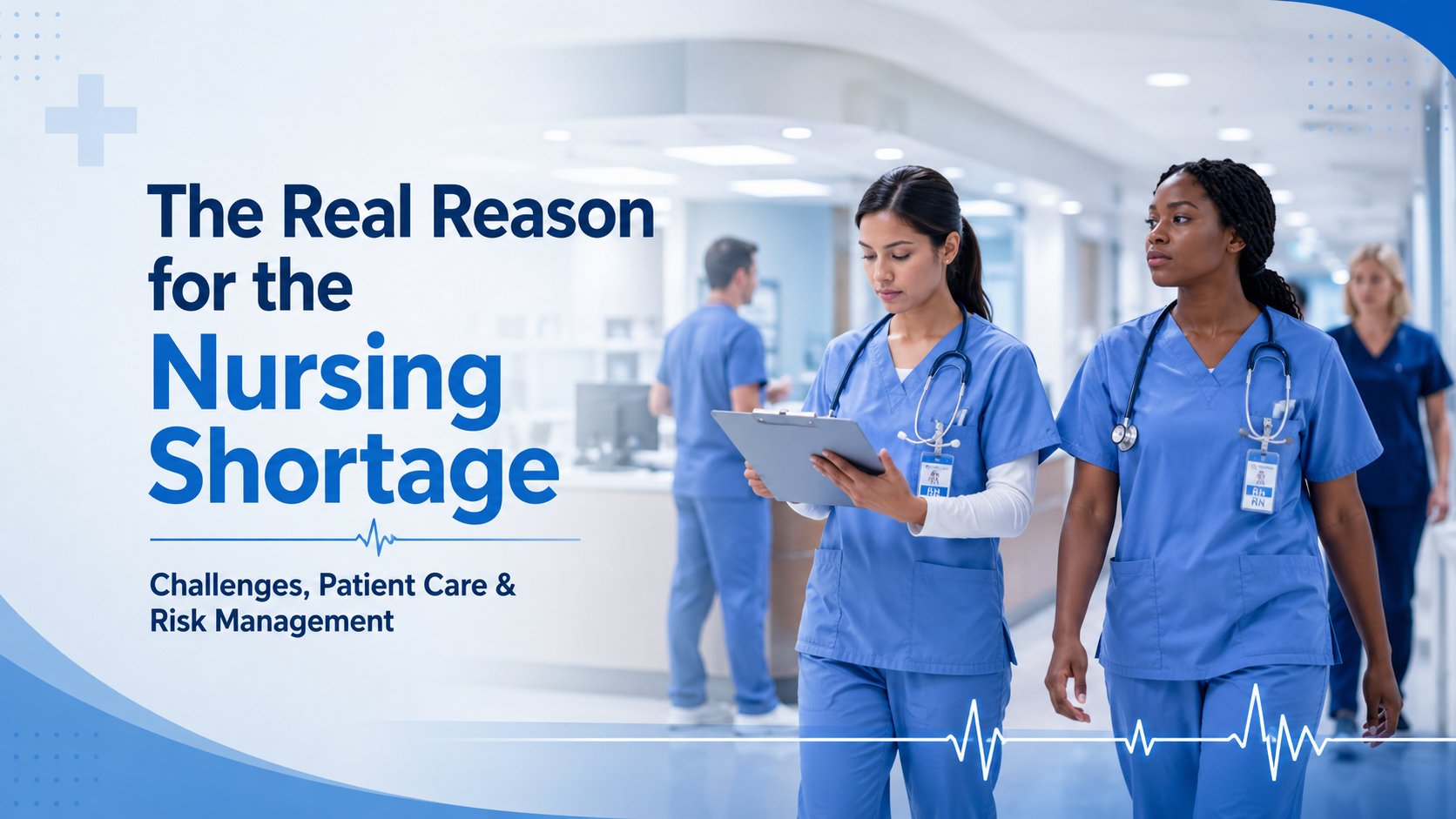
The Real Reason for the Nursing Shortage: Understanding the Challenges Facing Healthcare Today
The Real Reason for the Nursing Shortage
Healthcare organizations across the United States continue to face one of their greatest workforce challenges: the ongoing nursing shortage. While many people assume the issue began during the COVID-19 pandemic, the shortage has been developing for years.
An aging population, increased demand for healthcare services, burnout, workforce retirements, and limited nursing education capacity have combined to create a perfect storm. As hospitals and medical practices work to recruit and retain qualified nurses, the effects are being felt throughout the healthcare system.
Understanding the factors behind the nursing shortage can help healthcare leaders make informed decisions about staffing, patient safety, and risk management.
Why Is There a Nursing Shortage?
The nursing shortage isn’t caused by one problem. Instead, several long-term trends continue to strain the healthcare workforce.
An Aging Nursing Workforce
Many experienced registered nurses are approaching retirement age. As these professionals leave the workforce, healthcare organizations lose valuable clinical knowledge and mentorship.
Replacing experienced nurses takes time, especially in specialty areas such as emergency medicine, intensive care, labor and delivery, and surgery.
Growing Demand for Healthcare Services
Americans are living longer than ever before. As the population ages, demand for healthcare continues to rise.
More patients require:
- Chronic disease management
- Surgical procedures
- Emergency care
- Home healthcare
- Long-term care
- Specialty services
Healthcare organizations need more nurses to meet these growing demands.
Burnout and Workplace Stress
Burnout remains one of the biggest contributors to staffing shortages.
Many nurses report challenges including:
- Long shifts
- Mandatory overtime
- High patient loads
- Emotional stress
- Workplace violence
- Administrative responsibilities
When nurses experience prolonged stress, many choose to retire early, change careers, or pursue non-clinical positions.
Limited Nursing School Capacity
Interest in nursing careers remains strong. However, many qualified applicants cannot enroll because nursing schools face shortages of:
- Faculty
- Clinical training sites
- Classroom space
- Educational funding
Expanding nursing education remains one of the biggest opportunities to strengthen the future workforce.
How the Nursing Shortage Affects Patient Care
Staffing shortages can create challenges for both patients and healthcare organizations.
Potential impacts include:
- Longer patient wait times
- Increased workloads
- Delayed treatments
- Higher staff turnover
- Reduced patient satisfaction
- Increased administrative pressure
Healthcare leaders continue investing in recruitment, retention, and workflow improvements to help maintain quality care while supporting their teams.
Risk Management Becomes Even More Important
As staffing challenges continue, healthcare organizations should prioritize proactive risk management.
Key strategies include:
- Ongoing staff education
- Standardized clinical protocols
- Effective communication
- Accurate documentation
- Team collaboration
- Regular quality improvement initiatives
Strong operational practices help support patient safety while reducing unnecessary risk.
Medical Malpractice Insurance Remains Essential
Healthcare professionals work in complex environments where unexpected situations can occur.
Medical malpractice insurance helps protect physicians, nurse practitioners, CRNAs, physician assistants, and other healthcare providers from the financial impact of covered professional liability claims.
Reviewing your policy regularly helps ensure your coverage reflects your current responsibilities and scope of practice.
Learn more about available coverage by visiting:
👉 https://www.islandinsurancegroup.com/medical-malpractice-insurance/
Supporting Healthcare Professionals Through Changing Times
Despite today’s staffing challenges, nurses continue providing compassionate, high-quality care every day.
Healthcare organizations can support their workforce by investing in:
- Competitive compensation
- Continuing education
- Leadership development
- Flexible scheduling
- Wellness initiatives
- Modern technology
- Professional liability protection
These investments help strengthen teams while improving patient outcomes.
Protect Your Practice with Island Insurance Group
Whether you operate a private practice, ambulatory surgery center, clinic, or healthcare facility, having the right medical malpractice insurance is an important part of managing professional risk.
At Island Insurance Group, we work with healthcare professionals across multiple specialties to help them find coverage tailored to their unique needs. Our experienced advisors can review your current policy, discuss your options, and help you choose protection that aligns with your practice.
Learn more at https://www.islandinsurancegroup.com/ or contact us at https://www.islandinsurancegroup.com/contact-us/ to request a personalized quote.
Frequently Asked Questions
What is causing the nursing shortage?
The nursing shortage is driven by several factors, including retirements, workforce burnout, growing demand for healthcare services, and limited capacity in nursing education programs.
How does the nursing shortage affect healthcare?
Staffing shortages can increase workloads, extend wait times, and place additional pressure on healthcare organizations. Providers often respond by improving staffing strategies, workflow efficiency, and risk management practices.
Will the nursing shortage improve?
Many healthcare organizations, educational institutions, and policymakers are investing in recruitment, retention, and workforce development. While progress is being made, addressing the shortage will require sustained, long-term efforts.
Disclaimer: This article is for informational purposes only and should not be interpreted as legal, medical, or insurance advice. Coverage terms, conditions, and availability vary by policy. Consult a qualified insurance professional to discuss your specific needs.