The #1 Reason Doctors Get Sued Isn’t What Most Physicians Think
Quick Takeaways
- Many malpractice claims begin with communication breakdowns—not just poor medical outcomes.
- Patients who feel unheard are more likely to pursue legal action.
- Clear documentation and informed consent can significantly reduce risk.
- Strong physician-patient relationships are one of the best forms of risk management.
- The right malpractice insurance protects your career when prevention isn’t enough.
Why This Matters
Most physicians believe malpractice lawsuits happen because of a medical mistake.
The reality is often more complicated.
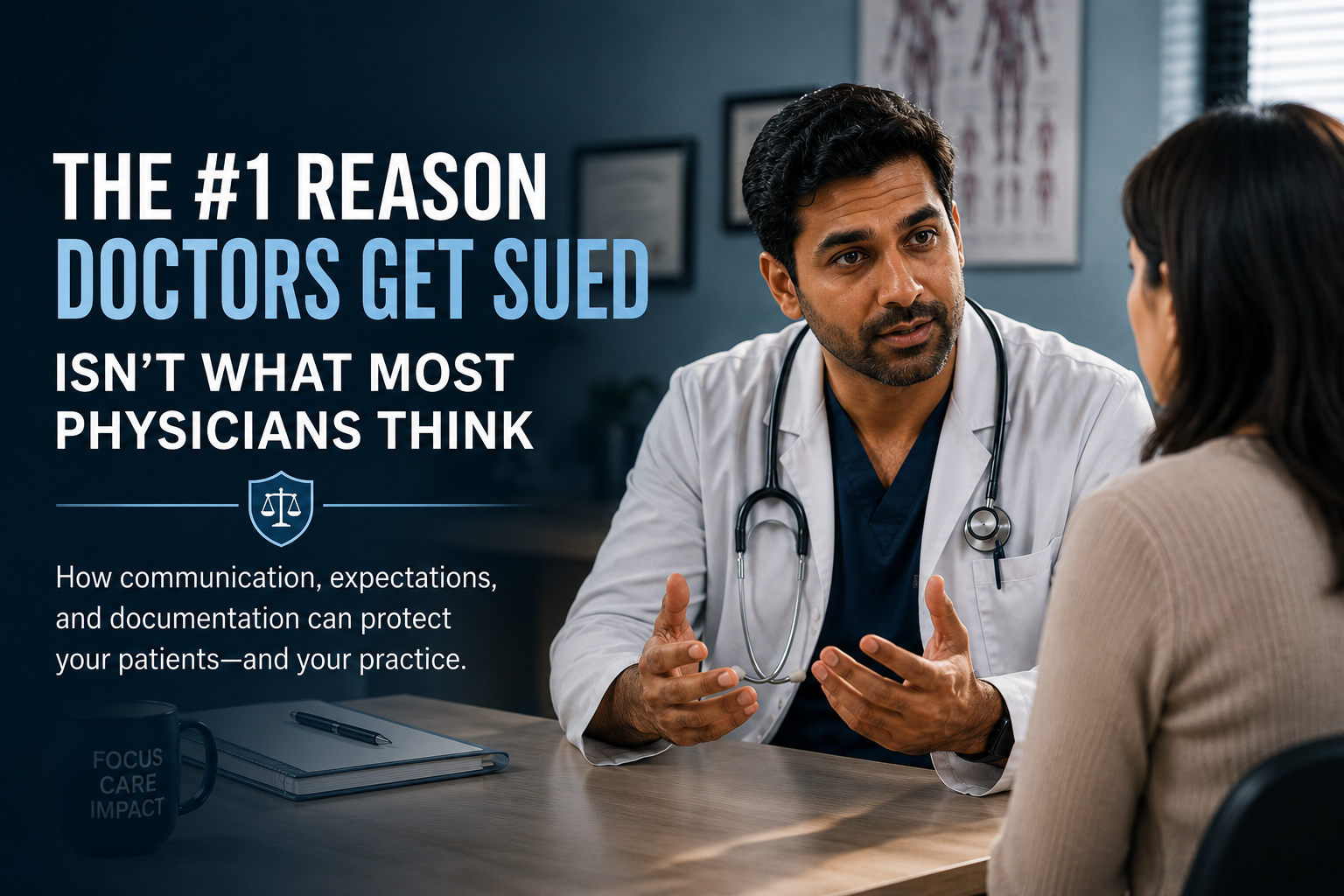
Many claims begin because a patient feels ignored, confused, or believes they weren’t given enough information about their care. Even when treatment meets the accepted standard of care, poor communication can damage trust—and once trust is lost, the likelihood of litigation increases.
Understanding these risks is one of the most effective ways to protect your practice.
Looking for more physician-focused risk management articles?
👉 Visit our Risk Intelligence Center: https://islandinsurancegroup.com/resources/
The Real Reason Many Doctors Get Sued
Medicine isn’t perfect.
Complications occur.
Treatments sometimes fail.
Even the most experienced physicians encounter unexpected outcomes.
What often determines whether an unhappy patient becomes a plaintiff isn’t the complication itself—it’s how the physician communicated before, during, and after the event.
Patients frequently report things like:
- “I never understood what was happening.”
- “The doctor didn’t listen.”
- “I felt rushed through my appointment.”
- “Nobody explained the risks.”
- “I couldn’t get answers after my procedure.”
When patients feel abandoned or uninformed, frustration can quickly turn into legal action.
Five Ways Physicians Can Reduce Malpractice Risk
1. Listen Before You Speak
Patients want to know they’ve been heard.
Allowing patients to fully explain their concerns builds trust while helping you gather valuable clinical information that may otherwise be overlooked.
Sometimes the most powerful risk management strategy is simply listening.
2. Set Realistic Expectations
Never promise perfect outcomes.
Instead, explain:
- Expected benefits
- Potential risks
- Possible complications
- Alternative treatments
- Recovery timelines
Patients are much more accepting of complications when they’ve been prepared for the possibility.
3. Document Every Meaningful Conversation
If it isn’t documented, it becomes much harder to prove later.
Your chart should include:
- Patient concerns
- Clinical findings
- Treatment recommendations
- Risks and benefits discussed
- Questions answered
- Informed consent
- Follow-up instructions
Good documentation tells the complete story of the patient’s care.
Want more physician risk management tips?
👉 Browse our educational library:
https://islandinsurancegroup.com/resources/
4. Improve Communication During Difficult Situations
Unexpected outcomes are part of medicine.
Disappearing after a complication isn’t.
Patients appreciate physicians who remain available, explain what happened honestly, and outline the next steps clearly.
Compassion often prevents misunderstandings from escalating.
5. Follow Up
A simple follow-up call can make a significant difference.
Checking on a patient’s recovery demonstrates that you care beyond the office visit.
That relationship can become one of your strongest defenses if questions ever arise later.
Documentation Is One of Your Best Legal Defenses
Medical records serve two purposes.
They support quality patient care.
They also become one of the most important pieces of evidence if a malpractice claim is ever filed.
Strong documentation demonstrates:
- Clinical reasoning
- Appropriate decision-making
- Patient education
- Informed consent
- Ongoing communication
The more complete the record, the easier it is to defend your care.
Malpractice Insurance Is Your Last Line of Defense
Communication and documentation reduce risk.
Insurance protects you when risk becomes reality.
Every physician should periodically review their malpractice coverage to ensure it aligns with their:
- Specialty
- Practice type
- State requirements
- Employment status
- Career goals
Understanding your policy before a claim occurs is just as important as having one.
For more educational content about malpractice insurance and physician risk management, visit our:
👉 Risk Intelligence Center
https://islandinsurancegroup.com/resources/
Frequently Asked Questions
Can a doctor be sued even if they did nothing wrong?
Yes. A malpractice lawsuit can be filed even when a physician met the standard of care. Many claims are ultimately dismissed or successfully defended, but the legal process itself can still be stressful and costly.
What causes most malpractice claims?
While clinical errors can lead to lawsuits, poor communication, unmet expectations, and inadequate documentation are common factors that contribute to many claims.
Does documentation help prevent lawsuits?
Documentation doesn’t prevent a lawsuit from being filed, but it can provide critical evidence supporting the care you delivered and the conversations you had with your patient.
Does malpractice insurance cover legal defense?
Many malpractice policies include legal defense as part of the coverage, but benefits vary depending on the policy. Physicians should understand exactly what their coverage includes before a claim occurs.
Continue Learning
If you found this article helpful, explore more physician-focused educational resources in the Island Insurance Group Risk Intelligence Center.
You’ll find articles covering topics such as:
- Medical malpractice insurance basics
- Claims-made vs. occurrence policies
- Tail coverage explained
- Risk management strategies
- Insurance guidance for healthcare professionals
👉 Explore the Resource Center:
https://islandinsurancegroup.com/resources/
About Island Insurance Group
Island Insurance Group specializes in medical malpractice insurance for physicians and healthcare professionals. Our goal is to help providers understand their risks, make informed coverage decisions, and protect the careers they’ve worked so hard to build.
Whether you’re a resident, attending physician, surgeon, locum tenens provider, or practice owner, we’re here to help you navigate the complexities of malpractice insurance with confidence.
Continue exploring our educational resources or contact our team to learn more: