7 Contract Red Flags You Should Never Ignore Before Signing
The most dangerous sentence in business might be:
“It’s just a standard contract.”
A contract can look routine while quietly creating obligations that last for years, transfer financial responsibility to your business, restrict your ability to leave an agreement, or require insurance coverage you do not currently carry.
That does not mean every complicated clause is bad.
It means you should understand what you are agreeing to before your signature makes it your problem.
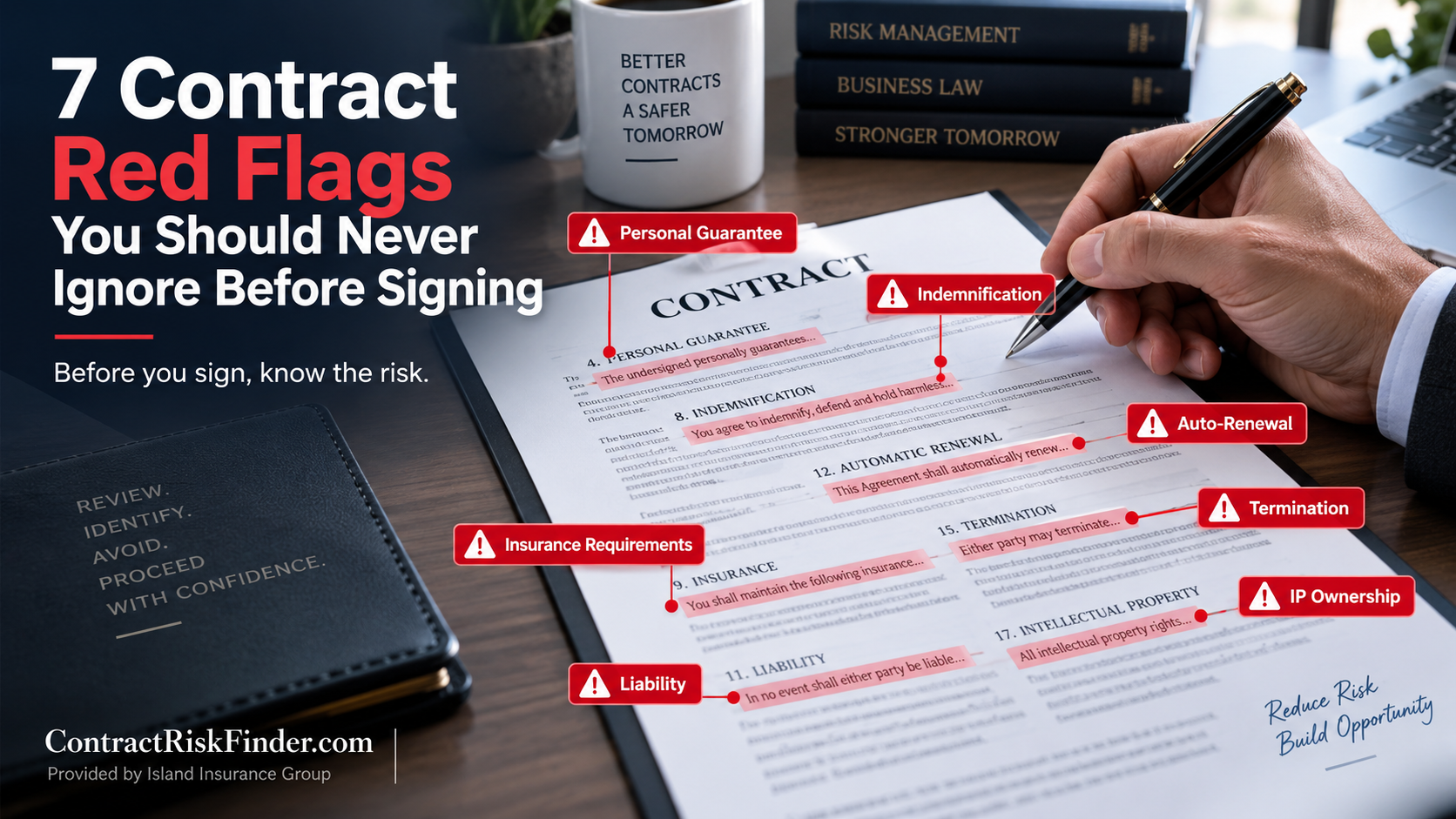
Here are seven contract provisions worth slowing down for.
1. Personal Guarantees
A personal guarantee can change the nature of a business transaction.
Instead of limiting an obligation to your company, certain language may create personal responsibility for a debt or obligation.
Business owners should look carefully for terms such as:
- Personal guarantee
- Guarantor
- Joint and several liability
- Individually liable
- Continuing guarantee
If you see this type of language, understand exactly what assets and obligations could potentially be affected.
2. Indemnification and Hold-Harmless Clauses
Indemnification determines who may be responsible when certain losses, claims, expenses, or legal disputes occur.
The important question is not simply whether the contract contains an indemnification clause.
Ask:
Who is indemnifying whom—and for what?
A broadly written obligation deserves careful review, especially if your business could become responsible for circumstances outside its direct control.
3. Automatic Renewal
You sign a one-year agreement.
Eleven months later, you decide to leave.
Then you discover the contract automatically renewed because cancellation had to be submitted 60 or 90 days earlier.
Automatic-renewal language can be easy to overlook.
Check:
- Renewal length
- Cancellation deadline
- Required method of notice
- Whether pricing changes at renewal
- Whether termination fees apply
Put important notice dates on your calendar immediately after signing.
4. One-Sided Termination Rights
Can the other party cancel whenever it wants while you remain locked into the agreement?
Review what happens if either party wants out.
Look for:
- Termination for cause
- Termination without cause
- Cure periods
- Early termination penalties
- Notice requirements
- Obligations surviving termination
The ability to enter a contract matters.
The ability to exit one matters just as much.
5. Insurance Requirements
Contracts routinely require businesses to carry specific types or amounts of insurance.
Requirements might involve:
- General liability
- Professional liability
- Cyber liability
- Commercial auto
- Workers’ compensation
- Umbrella or excess liability
- Additional insured status
A contract and your insurance program should not be viewed in isolation.
If your agreement requires protection your current policy does not provide, you may have a gap between what you promised contractually and what your insurance actually covers.
Explore business insurance guidance from Island Insurance Group
6. Limitation of Liability
A limitation-of-liability provision may restrict how much one party can recover if something goes wrong.
That can be valuable protection—or a major disadvantage—depending on how it is written.
Review whether the limitation:
- Applies equally to both parties
- Has a specific dollar cap
- Excludes certain types of damages
- Contains exceptions
- Conflicts with other obligations in the contract
Never assume the heading tells you the whole story.
7. Intellectual Property Ownership
If your business creates software, designs, marketing material, photography, written content, processes, inventions, or other intellectual property, ownership language deserves special attention.
Ask:
What belongs to you before the relationship begins, and what belongs to the other party afterward?
A few sentences can determine who owns work that may become far more valuable later.
The Smarter First Step: Scan Before You Sign
Most business owners are not trying to become contract attorneys.
They simply need a faster way to identify the sections that deserve questions.
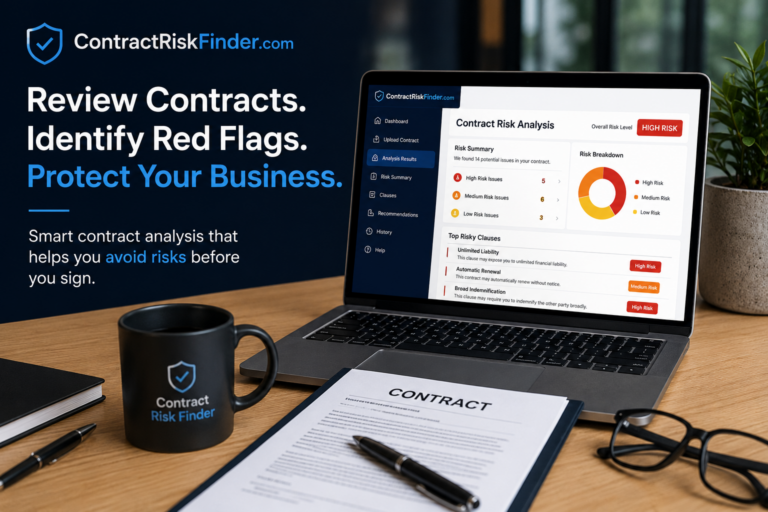
ContractRiskFinder is designed to help surface potential contractual risks, confusing provisions, insurance requirements, indemnity obligations, renewal language, and other areas that may deserve closer review.
Think of it as a first-pass risk visibility tool.
Upload the agreement.
Identify the potential issues.
Ask better questions.
Then decide whether the contract should be negotiated, reviewed by legal counsel, or signed as presented.
Your Signature Should Be the Last Step
A contract does not become important when a dispute starts.
It was important when you signed it.
Before your next vendor agreement, service contract, lease, consulting agreement, or other important contract becomes binding, take time to understand what is actually on the page.
Before you sign it, know what is in it.
Review your contract with ContractRiskFinder
ContractRiskFinder is provided as part of the risk-intelligence resources associated with Island Insurance Group.
DISCLAIMER
ContractRiskFinder provides educational risk-identification information and is not a law firm or substitute for legal advice. Consult a qualified attorney for legal advice regarding your specific contract. Insurance coverage is subject to actual policy terms, conditions, exclusions, underwriting, and applicable law.