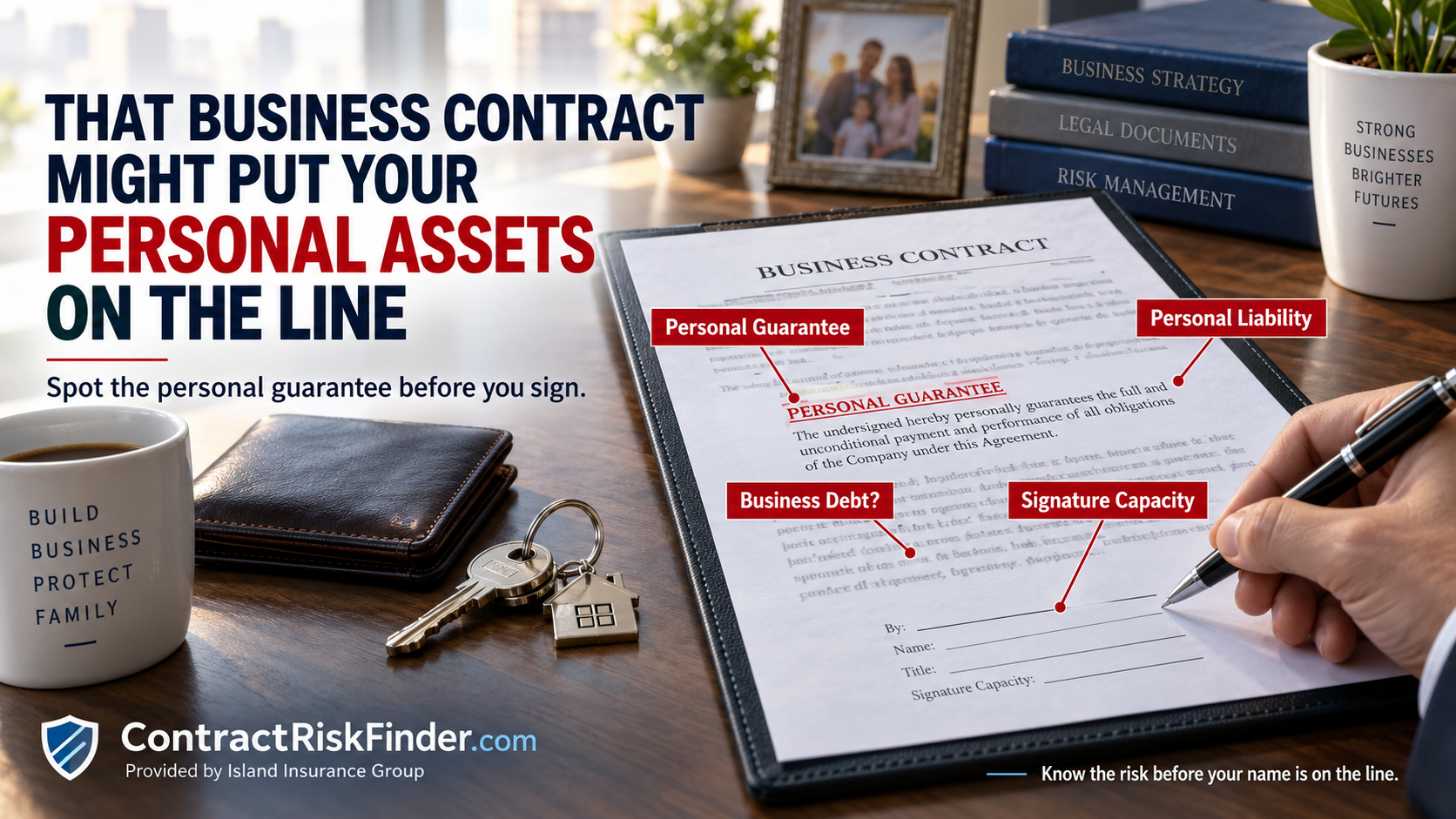
That Business Contract Might Put Your Personal Assets on the Line
You created a corporation or LLC partly to separate your business from your personal life.
Then you sign one document without noticing two words:
Personal Guarantee.
That deserves your attention.
Personal guarantees can appear in commercial leases, financing agreements, equipment leases, vendor arrangements and other business contracts.
The important point is simple:
Do not assume every obligation belongs solely to the business just because the company name appears at the top of the contract.
What Is a Personal Guarantee?
Generally, a personal guarantee involves an individual agreeing to be responsible for certain obligations of another party, such as a business.
The specific consequences depend entirely on the language of the agreement and applicable law.
That is why the exact wording matters.
Terms worth noticing include:
- Personal guarantee
- Guarantor
- Continuing guarantee
- Joint and several
- Individual capacity
- Personally liable
A signature block can matter too.
Make sure you understand which capacity you are signing in.
Why Business Owners Miss Personal Guarantees
Sometimes the guarantee is obvious.
Sometimes it is not.
The language might appear:
- Near the end of a long agreement
- In an exhibit
- In a credit application
- In a lease addendum
- Directly above a second signature line
- In incorporated terms or supplemental documents
When someone says, “It’s standard,” that does not eliminate the need to understand it.
Ask How Broad the Guarantee Is
Not all guarantees are identical.
Questions may include:
- What obligations are guaranteed?
- Is there a financial limit?
- How long does the guarantee continue?
- Does it survive renewal?
- Can it be terminated?
- Does it cover fees or other costs?
- Is the guarantee triggered automatically?
- Are multiple guarantors involved?
These are the kinds of questions that should be answered before signing.
Look at the Entire Contract, Not One Clause
A personal guarantee does not operate in isolation.
Payment provisions, default clauses, renewals, indemnity language, damages, dispute provisions and termination rights may all affect the bigger picture.
That is why contract risk review should look for relationships between provisions, not merely keywords.
Technology Can Help With the First Pass
You do not need to manually hunt through every page hoping you recognize every legal phrase.
ContractRiskFinder is designed to help identify potential risk areas and provisions that deserve closer inspection.
It can provide a starting point for questions such as:
- Where does personal liability appear?
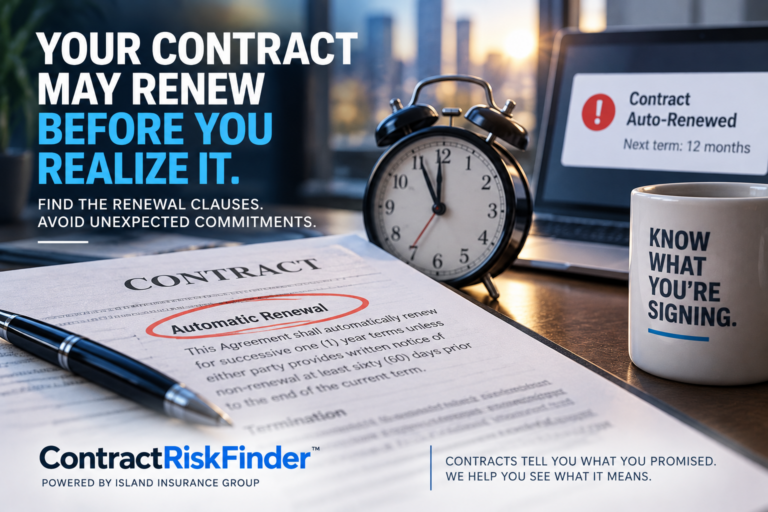
- What renewal provisions exist?
- Are there indemnification obligations?
- Are there insurance requirements?
- What happens following a default?
- How can the agreement be terminated?
It does not replace an attorney.
It helps you know where to focus.
Contracts and Insurance Should Be Reviewed Together
Some contractual obligations may also create insurance questions.
A business owner who accepts broad liability under an agreement should not automatically assume an insurance policy will respond in exactly the same way.
Island Insurance Group focuses on helping businesses understand risk, contractual obligations and insurance protection before problems occur.
ContractRiskFinder complements that process by helping identify potential issues in the agreement itself.
Before You Put Your Name on the Line
A signature takes seconds.
The obligations attached to it can last much longer.
Before signing an important business agreement:
- Read the full contract.
- Identify personal-guarantee language.
- Review termination and default provisions.
- Identify indemnity and insurance requirements.
- Ask questions about language you do not understand.
- Seek legal advice when appropriate.
Start your first-pass review with ContractRiskFinder.
Because the most important time to find a contractual risk is before you accept it.
DISCLAIMER
This article is for general educational purposes and does not constitute legal advice. Whether a personal guarantee is valid, enforceable, limited, or applicable depends on the contract, facts and applicable law. Consult a qualified attorney before signing an agreement involving significant personal or business obligations.