
Red flags in a small business loan agreement
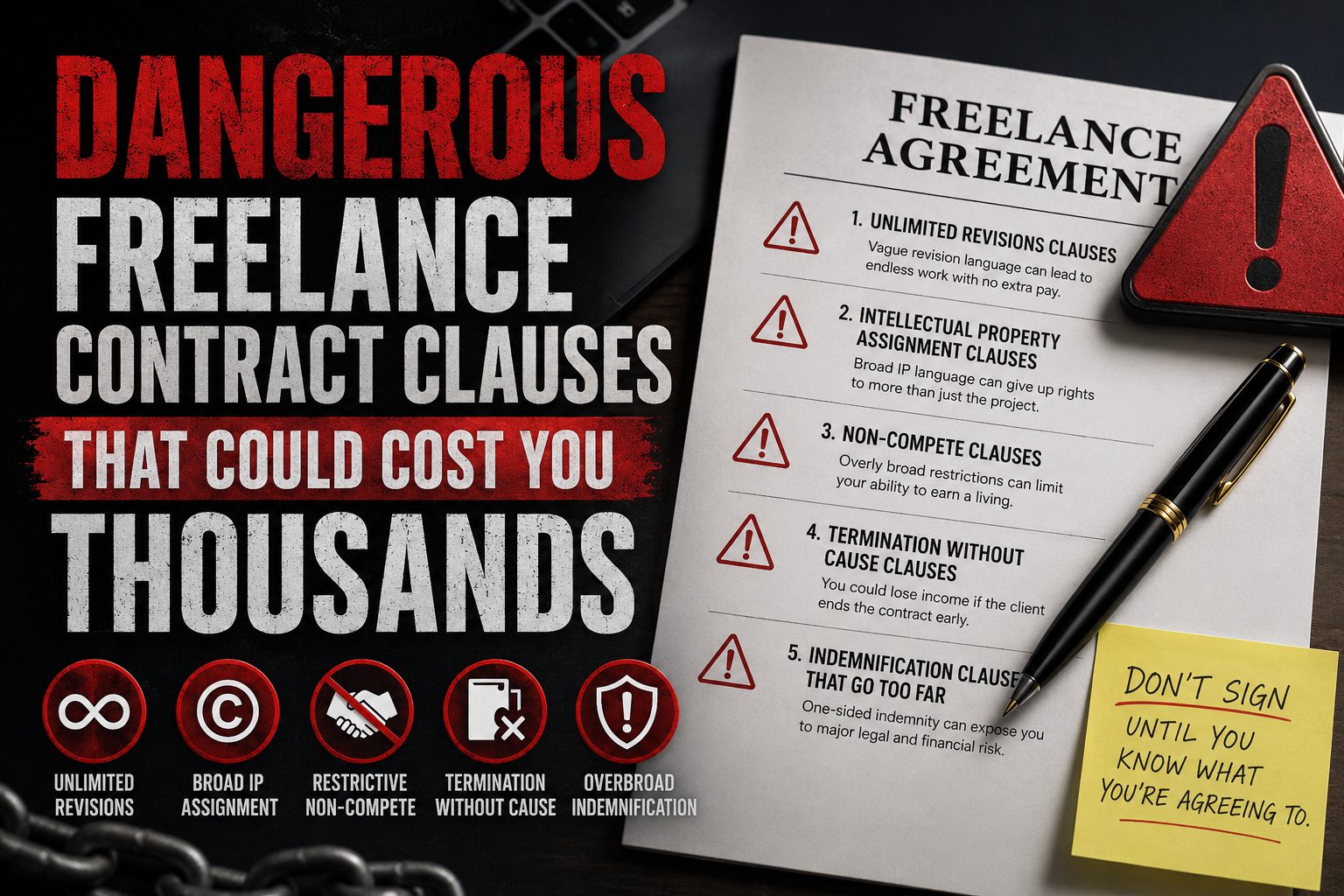
Dangerous Freelance Contract Clauses That Could Cost You Thousands
Freelancing offers freedom, flexibility, and the chance to build a business on your own terms. But every client relationship begins with a contract — and that contract can either protect you or quietly set you up for financial disaster. The truth is, most freelancers sign agreements without fully understanding what they’re agreeing to, and certain clauses buried deep in the fine print can result in unpaid invoices, unlimited revisions, or even legal liability.
Before you put your signature on any freelance agreement, you need to know which clauses carry the most risk. Here are the most dangerous freelance contract clauses that experienced professionals watch out for — and why you should too.
1. Unlimited Revisions Clauses
One of the most common traps in freelance contracts is vague language around revisions. A clause that says something like “the contractor will make revisions until the client is satisfied” sounds harmless on the surface. In practice, it means you could spend months reworking the same project without any additional compensation.
A well-drafted contract should clearly define:
- The number of revision rounds included in the project scope
- What constitutes a revision versus a new request
- The rate charged for revisions beyond the agreed limit
If your contract doesn’t specify these boundaries, you’re essentially giving your client a blank check drawn on your time.
2. Intellectual Property Assignment Clauses
Many freelance contracts include broad intellectual property (IP) assignment clauses that transfer full ownership of your work to the client. This is common and expected in many industries — but the danger lies in overly broad language that assigns rights to work created outside the specific project.
Watch for phrases like “any work created during the term of this agreement” or “all work product, including derivative works.” These clauses could technically claim ownership over side projects, personal creative work, or tools and templates you developed independently. Always negotiate to limit IP assignment strictly to the deliverables outlined in the project scope.
3. Non-Compete Clauses
Non-compete clauses can seriously restrict your ability to earn a living. Some client contracts prohibit you from working with competitors for months or even years after a project ends. For a freelancer who relies on a specific niche or industry, this can be devastating.
Before signing, ask yourself:
- How broad is the definition of “competitor”?
- How long does the restriction last?
- Does the geographic scope make sense for your business?
Overly aggressive non-competes are often unenforceable depending on your jurisdiction, but fighting them in court is expensive and time-consuming. It’s far better to catch these clauses before signing.
4. Termination Without Cause Clauses
A termination without cause clause allows a client to end the contract at any time, for any reason, with little or no notice. If this clause doesn’t include a kill fee or payment for work completed, you could lose significant income on projects you’ve already invested time into.
Always ensure your contract specifies that you will be compensated for all work completed up to the termination date, and ideally includes a kill fee — typically 25% to 50% of the remaining contract value — if the client ends the project early without cause.
5. Indemnification Clauses That Go Too Far
Indemnification clauses require one party to cover the legal costs and damages of the other. A reasonable indemnification clause protects a client if your work directly causes them harm due to your negligence. But some contracts include one-sided indemnification language that holds you responsible for claims that have nothing to do with your actual work.
Be wary of clauses that indemnify the client for “any and all claims arising from the contractor’s services” without clearly defining what those services are. Broad indemnification language can expose you to significant legal liability.
Frequently Asked Questions About Freelance Contract Clauses
What makes a freelance contract clause “risky”?
A clause is risky when it creates ambiguity, shifts significant liability onto you, limits your ability to earn income, or grants the client rights that extend far beyond the scope of the project.
Can I negotiate contract clauses with clients?
Absolutely. Most clients expect some level of negotiation. Identifying problematic clauses early gives you the opportunity to propose fairer language before the project begins.
Do I need a lawyer to review every freelance contract?
Not necessarily. AI-powered contract review tools can instantly flag high-risk clauses at a fraction of the cost of legal counsel, making them an excellent first line of defense for freelancers.
What should I do if a client refuses to change a risky clause?
That’s a red flag in itself. A client who won’t negotiate fair terms may not be a client worth working with.
Don’t Sign Until You Know What You’re Agreeing To
Freelance contracts protect your business — but only if you actually read and understand them. Risky clauses don’t announce themselves. They hide in legal language designed to look routine until something goes wrong.
The smartest move you can make before signing any contract is to get it reviewed by a tool built specifically for this purpose. Upload your contract to Contract Risk Finder today and get an instant red-flag review that highlights dangerous clauses before they cost you. It takes seconds and could save you thousands.