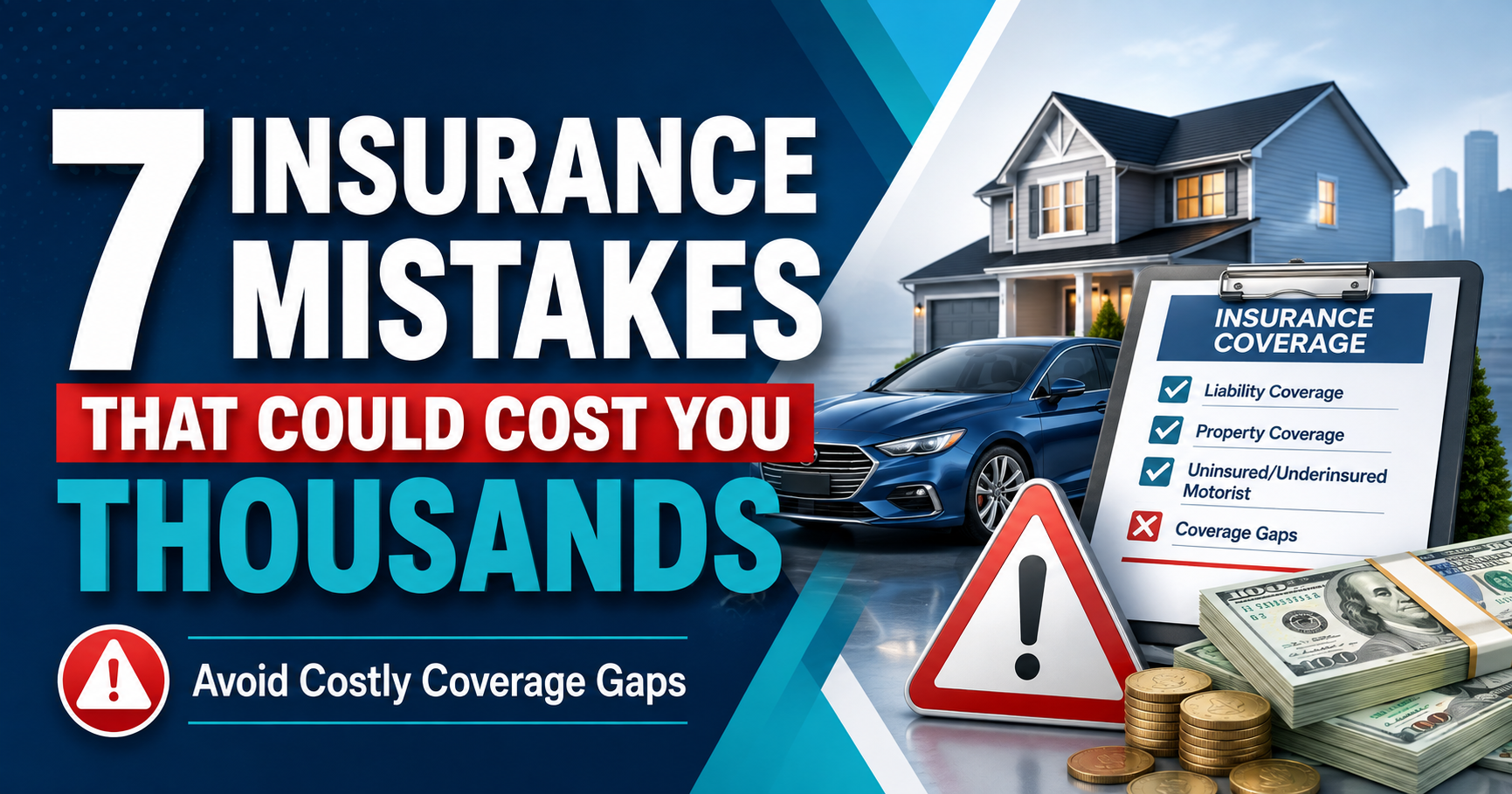
7 Insurance Mistakes That Could Cost You Thousands — And How to Avoid Them
Insurance is one of those things most people don’t think about until they need it.
And by then, a small oversight can become a very expensive problem.
Whether you own a home, drive every day, run a business, or simply want to protect your family financially, the details inside your insurance policies matter more than most people realize.
The good news? Many costly insurance mistakes are completely avoidable.
Here are seven of the most common mistakes people make — and what you can do instead.
1. Choosing Insurance Based on Price Alone
Everyone wants to save money.
But the cheapest policy is not always the best deal.
A lower premium can sometimes come with:
- Higher deductibles
- Lower coverage limits
- Fewer protections
- More exclusions
- Less flexibility after a claim
Saving a few dollars each month may not feel like much of a bargain if you later discover that an important loss isn’t adequately covered.
The better approach is to compare both price and protection.
If you’re unsure whether your current policy gives you the coverage you actually need, Island Insurance Group can help you review your options.
2. Letting Your Policy Automatically Renew Every Year
Automatic renewal is convenient.
It can also make it easy to ignore changes in your life.
Think about how much can change in 12 months.
You may have:
- Renovated your home
- Purchased expensive electronics
- Added a new driver
- Bought another vehicle
- Started working from home
- Opened a business
- Added a pool, shed, or other structure
- Increased your income or assets
Your insurance should evolve with those changes.
A policy that worked perfectly three years ago may not provide the same level of protection today.
Consider reviewing your coverage at least once a year.
3. Assuming Homeowners Insurance Covers Every Type of Water Damage
This is one of the most important insurance misunderstandings.
Many homeowners assume that if water damages their house, homeowners insurance will automatically cover it.
That isn’t necessarily true.
Certain types of water damage may be covered depending on the policy and circumstances, while flooding caused by rising surface water is generally treated differently and may require separate flood insurance.
That means homeowners should understand the difference before severe weather arrives.
If flood protection is something you haven’t reviewed recently, visit IslandInsuranceGroup.com to explore your insurance options.
4. Carrying the Minimum Auto Insurance Required
Minimum coverage may satisfy legal requirements.
But legal minimums and adequate financial protection are not the same thing.
Imagine causing an accident involving:
- Multiple vehicles
- Significant injuries
- Expensive property damage
- Lost wages
- Legal expenses
If the total damages exceed your liability coverage limits, you could potentially be responsible for the difference.
That’s why it’s worth asking an important question:
Would my current limits protect me in a serious accident — not just a minor one?
The answer may change how you think about auto insurance.
5. Forgetting About Liability Protection
Most people think about insurance in terms of replacing things.
A damaged roof.
A wrecked car.
Stolen property.
But liability claims can sometimes create an even larger financial risk.
For example, what happens if:
- Someone is seriously injured on your property?
- Your dog injures someone?
- You accidentally cause major damage to someone else’s property?
- An auto accident results in a large lawsuit?
Depending on your situation, an umbrella insurance policy may provide additional liability protection above certain underlying insurance limits.
People with homes, savings, investments, or other significant assets may want to discuss whether additional liability coverage makes sense.
6. Not Keeping an Inventory of Your Belongings
Quick question:
Could you list everything inside your home right now?
Probably not.
Most people significantly underestimate how much their belongings are worth.
Think about your:
- Furniture
- Clothing
- Computers
- Televisions
- Kitchen appliances
- Tools
- Sporting equipment
- Jewelry
- Home office equipment
- Children’s belongings
Now imagine trying to remember all of it after a fire or major disaster.
A simple home inventory can make that process much easier.
Use your phone to walk through each room and record a video. Take photos of valuable items. Save receipts and serial numbers when possible.
Store the information somewhere secure and accessible outside your home.
It takes very little time — and you may be extremely glad you did it.
7. Waiting Until Something Happens to Learn What Your Policy Covers
This may be the biggest insurance mistake of all.
After an accident, storm, fire, theft, or other emergency is the worst possible time to discover that your coverage works differently than you expected.
Read your policy.
Ask questions.
Understand your deductibles.
Know your limits.
Learn what is excluded.
And review your coverage before you need to use it.
Insurance should provide confidence before something goes wrong — not confusion afterward.
One Simple Insurance Check Could Save You From a Major Financial Surprise
You don’t necessarily need more insurance.
You need the right insurance for your current situation.
That means understanding what you have, what it protects, and where potential gaps may exist.
If it has been a while since your last insurance review, now may be a good time to take another look.
Visit Island Insurance Group to learn more, explore coverage options, or request help reviewing your current insurance needs.
Ready to Review Your Coverage?
Don’t wait until a claim reveals a gap you could have addressed earlier.
Visit https://islandinsurancegroup.com/ today and speak with Island Insurance Group about protecting what matters most.
Insurance coverage, availability, limits, exclusions, and eligibility vary by policy and carrier. Consult your insurance professional and policy documents for details.